Where's Git Download Location Mac
Git is a version control system that allows developers to track a project and actively contribute without interfering in each other’s work.
- Git Bash Download Mac
- Where's Git Download Location Mac Download
- Where's Git Download Location Mac Free
- Git On Mac
- Git Download Location Mac
It supports collaboration within a project and helps prevent miscommunication or code clashing between team members. The system tracks and saves snapshots of an evolving project, essentially keeping a history of the development.
In the General tab, look in the Downloads area. The download location is in the Save Files To setting. Safari (Mac OS): Choose Safari Preferences. In the General tab, the download location is in the Save Downloaded Files To setting. Git comes with built-in GUI tools for committing and browsing , but there are several third-party tools for users looking for platform-specific experience.If you want to add another GUI tool to this list, just follow the instructions. All Windows Mac Linux Android iOS. On your Mac, choose Apple menu System Preferences, then click Apple ID. Open Apple ID preferences for me. If you don’t see Apple ID, click Sign In, then sign in with your Apple ID or click Create Apple ID (if you don’t already have one). Click iCloud in the sidebar. Select Find My Mac, then click Allow (if asked) to allow Find My Mac to use the location of your Mac.
Users who install the software on their machines can communicate with each other through the system. An even better solution is collaborating over a centralized source (for example, GitHub) where developers can push and pull changes on the cloud.
MacOS Sierra 10.12 DMG Mac Free Download 1. Once you have paired through Bluetooth or Wi-Fi your favourite apple device say the apple watch, when the watch is in close proximity with the device it automatically unlocks without you entering the passcode. The Auto Unlock featureThis tech feature allows you to pair your favourite apple device with your MacBook or a Macintosh computer. Download mac os sierra installer file.
In this tutorial, you will learn how to install and get started with Git on Mac.
There are many different ways to set up Git on Mac. If you prefer using a GUI, Git offers a simple installation using the installer for Mac. On the other hand, you can install Git using the terminal with a couple of simple commands.
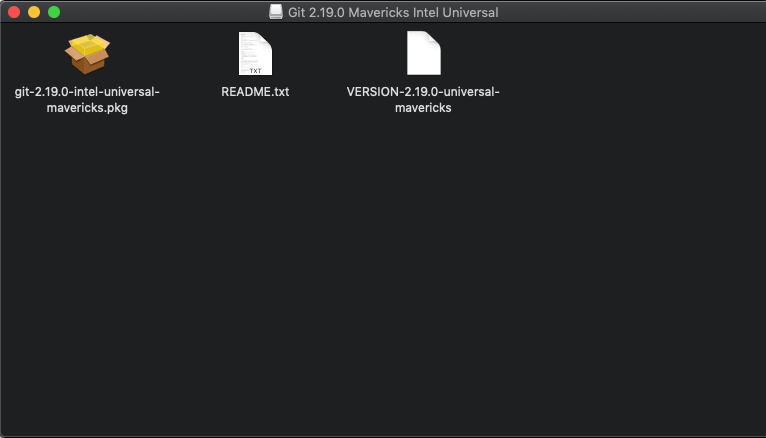
The easiest way to set up Git is to use the Git installer for Mac.
1. Open a browser and navigate to Git’s official website.
2. You will see a display showing the version number of the latest source release and a download button, as in the image below.
3. Click Download, and it automatically downloads the software package on your system.
4. Find the package and double-click to open the Git installer.
5. Follow the installation wizard and configure Git to suit your development needs. If you are new to version control systems, the best option would be to leave the default settings.
6. Click Install and type in your password if necessary.
7. Confirm once again by clicking Install Software.
With this, you have finished setting up Git on your Mac. Move on to the next step of configuring Git.
There are multiple ways to install Git on Mac via terminal, depending on the development environment or package manager you have on your system.
This guide includes three different options.
If you prefer the terminal, using Xcode is the fastest and easiest way to start working with Git. Its command-line tools include Git in the package.
Users who don’t have Xcode can install it with a single command:
With Xcode running on your Mac, you can check whether Git is also available by prompting for the Git version:
The output should display the latest Git release, as in the example below.
If you do not have Git, it automatically asks you whether you want to install it. Confirm the installation, and Xcode sets up Git.
Another way to install Git is with Homebrew, the package management system for Mac.
Run the following brew command in the terminal:
Then, check the Git version to verify the installation:
If you are using MacPorts to manage your packages on the system, you can use the port command to set up Git.
Start by updating MacPorts with the command:
Search for and install the newest Git ports and variants by running the following two commands:
Then, install Git with:
Note: When setting up Git with MacPorts, you can install additional tools you may find useful in the future. Add the bash-completion, svn, and the docs to the command for installing: sudo port install git +svn +doc +bash_completion +gitweb
The next step is to configure Git by adding your credentials to the system. This is important as it helps keep track of which user is committing changes to a project.
Open the terminal and configure your GitHub username:
Then, add your email:
لوحة المفاتيح العربيةLexilogos arabic keyboard المشتركة هو لوحة المفاتيح العربية الظاهري والبصرية لكتابة العربية بواسطة الوحة العادية Azerty أو Qwerty البحث باللغة الإنترنت بما في ذلك غوغل والفيسبوك، يوتيوب والترجمة من اللغة العربية إلى الإنجليزية والفرنسية والاسبانية والروسية وغيرها التركي والترجمة إلى الكتابات العربية من النصوص في لغات أخرى. Vietnamese fonts for mac free download.
To demonstrate how to work with files on local Git repositories, we are going to create a demo folder and file to work with.
1. First, open the terminal and create a new folder named NewFolder.
2. Then, move into that directory. The path may differ according to the location where you created the new folder.
3. As we want to keep track of changes inside this folder, we need to create a local Git repository for it. Running the git init command initializes an empty git repository in this particular location. Therefore, run the command:
With this, you have added a hidden folder inside the directory by the name .git.
Note: To see the hidden .git folder, you need to run the command: defaults write com.apple.finder AppleShowAllFiles YES. If you want to hide the folder again, modify the last part of the command by changing the YES to NO).
4. While in the directory NewFolder, type the following command:
This shows the state of the working directory and displays if any changes made inside the directory.
Since the folder we created doesn’t have any files in it, the output responds with: nothing to commit.
5. Add some files inside NewFolder and see how the git status changes:
6. Check the status again:
The output tells you there are untracked files inside the directory and lists file1.txt. Git is tracking the folder in which the file was added, and notifies you that the changes are not being tracked.
7. Prompt Git to track the new file by running:
If you recheck the git status now, you would see that the file is now being tracked (as it changed from red to green). However, you still need to commit this change.
8. Commit all changes and add a message that describes the commit:
Now, the output tells you the working tree is clean, and there is nothing to commit.
As you can see, it is not difficult to install Git on Mac. With this tutorial, you should have successfully set up Git and configured it to start working with this version control system.
Next you should also read
Developers need to switch between branches frequently. Git branches allow you to work on your code, fix bugs,…
Git is a version control system that helps you control the stages of software development. It uses named…
This article outlines the basic commands needed to create a Git branch. A Git branch allows you to work on…
The hosts file in Windows, Mac, or Linux maps hostnames to IP addresses. This could be in an intranet, like a…
The Finder is the first thing that you see when your Mac finishes starting up. It opens automatically and stays open as you use other apps. It includes the Finder menu bar at the top of the screen and the desktop below that. It uses windows and icons to show you the contents of your Mac, iCloud Drive, and other storage devices. It's called the Finder because it helps you to find and organise your files.
Git Bash Download Mac
Open windows and files
To open a window and see the files on your Mac, switch to the Finder by clicking the Finder icon (pictured above) in the Dock. Switching to the Finder also reveals any Finder windows that might be hidden behind the windows of other apps. You can drag to resize windows and use the buttons to close , minimise or maximise windows. Learn more about managing windows.
When you see a document, app or other file that you want to open, just double-click it.
Change how your files are displayed
To change how files are displayed in Finder windows, use the View menu in the menu bar or the row of buttons at the top of the Finder window. You can view files as icons , in a list , in columns or in a gallery . And for each view, the View menu provides options to change how items are sorted and arranged, such as by kind, date or size. Learn more about customising views.
When you view files in a gallery, you can browse your files visually using large previews, so it's easy to identify images, videos and all kinds of documents. Gallery View in macOS Mojave even lets you play videos and scroll through multi-page documents. Earlier versions of macOS have a similar but less powerful gallery view called Cover Flow .
Gallery View in macOS Mojave, showing the sidebar on the left and the Preview pane on the right.
Use the Preview pane
Where's Git Download Location Mac Download
The Preview pane is available in all views by choosing View > Show Preview from the menu bar. Or press Shift-Command (⌘)-P to show or hide the Preview pane quickly.
macOS Mojave enhances the Preview pane in several ways:
- More information, including detailed metadata, can be shown for each file. This is particularly useful when working with photos and media, because key EXIF data, such as camera model and aperture value, are easy to locate. Choose View > Preview Options to control what information the Preview pane can show for the kind of file selected.
- Quick Actions let you easily manage or edit the selected file.
Where's Git Download Location Mac Free
Use Quick Actions in the Preview pane
With Quick Actions in macOS Mojave, you can take actions on a file without opening an app. Quick Actions appear at the bottom of the Preview pane and vary depending on the kind of file selected.
- Rotate an image
- Mark up an image or PDF
- Combine images and PDFs into a single PDF file
- Trim audio and video files
To manage Quick Actions, click More , then choose Customise. macOS Mojave includes a standard set of Quick Actions, but Quick Actions installed by third-party apps also appear here. You can even create your own Quick Actions using Automator.
Use Stacks on your desktop
macOS Mojave introduces Stacks, which lets you automatically organise your desktop into neat stacks of files, so it's easy to keep your desktop tidy and find exactly what you're looking for. Learn more about Stacks.
The sidebar in Finder windows contains shortcuts to AirDrop, commonly used folders, iCloud Drive, devices such as your hard drives and more. Like items in the Dock, items in the sidebar open with just one click.
To change the items in your sidebar, choose Finder > Preferences from the Finder menu bar, then click Sidebar at the top of the preferences window. You can also drag files into or out of the sidebar. Learn more about customising the sidebar.
Search for files
To search with Spotlight, click the magnifying glass in the menu bar, or press Command–Space bar. Spotlight is similar to Quick Search on iPhone or iPad. Learn more about Spotlight.
To search from a Finder window, use the search field in the corner of the window:
Git On Mac
When you select a search result, its location appears at the bottom of the window. To get to this view from Spotlight, choose 'Show all in Finder' from the bottom of the Spotlight search results.
In both Spotlight and Finder, you can use advanced searches to narrow your search results.
Git Download Location Mac
Delete files
To move a file to the Trash, drag the file to the Trash in the Dock. Or select one or more files and choose File > Move To Trash (Command-Delete).
To remove a file from the Trash, click the Trash to open it, then drag the file out of the Trash. Or select the file and choose File > Put Back.
To delete the files in the Trash, choose File > Empty Trash. The storage space used by those files then becomes available for other files. In macOS Sierra, you can set up your Mac to empty the trash automatically.